Korean Cuisine
Fruit Kimchi with Napa Cabbage
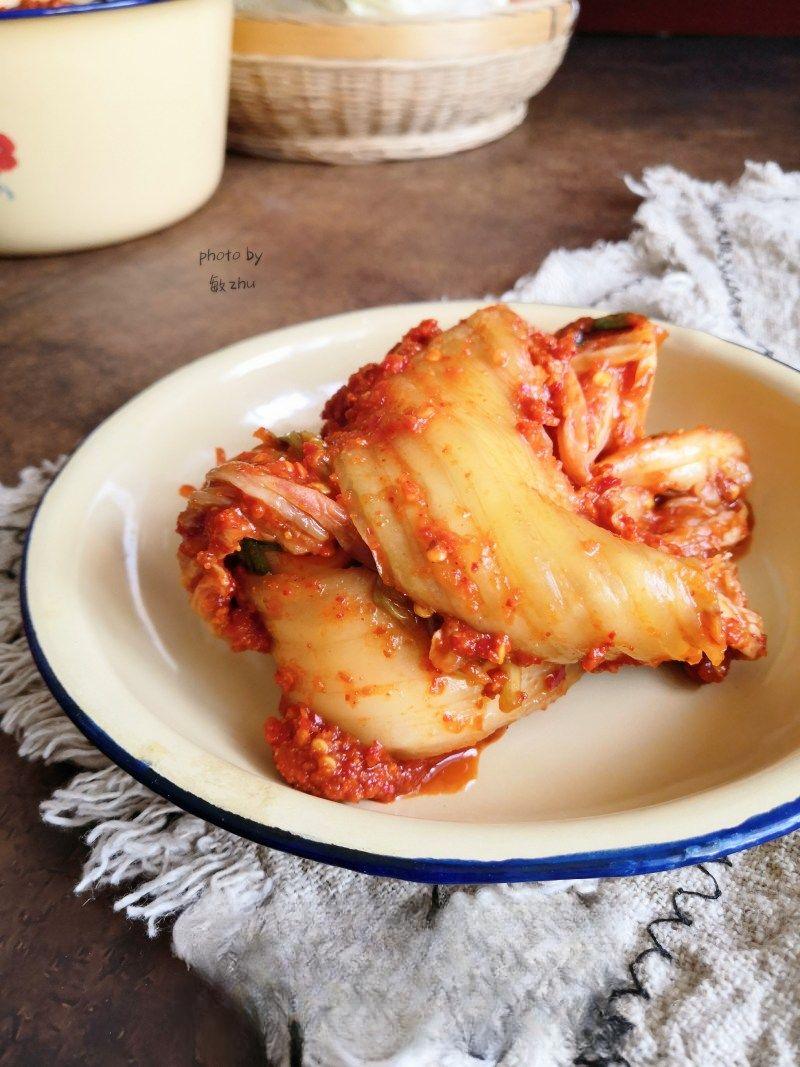
A homemade kimchi made with napa cabbage, apple, and Asian pear. The fruit puree adds natural sweetness while garlic, ginger, and chili create a balanced spicy and tangy flavor after fermentation.
- Total
- 14 days
Quick Recipe Summary
- Cuisine
- Chinese
- Category
- Korean Cuisine
- Method
- Soup
- Total Time
- 14 days
- Difficulty
- Medium
- Main Ingredient
- head Napa Cabbage
About This Recipe
A homemade kimchi made with napa cabbage, apple, and Asian pear. The fruit puree adds natural sweetness while garlic, ginger, and chili create a balanced spicy and tangy flavor after fermentation.
Why You'll Love This Recipe
- Written with clear home-cooking steps so the process is easier to follow from start to finish.
- Breaks the method into manageable steps instead of assuming you already know the technique.
- Gives the dish a clear tangy and spicy flavor profile without making the method feel complicated.
- Useful as a reference recipe because the steps explain both what to do and what to watch for.
Ingredients
- 1/2 head Napa Cabbage
- 1 Apple
- 1 Asian Pear
- 1 whole head Garlic
- 1 piece Ginger
- 2 stalks Green Onions
- 1 Carrot
- To taste Salt
- 2-3 tbsp White Vinegar
- 2-3 tbsp Sugar
- 2 tbsp Chili Flakes
- 1 tbsp (optional) Sichuan Pepper Flakes
Ingredient Notes
These notes explain the role of the main ingredients so the recipe is easier to adjust.
head Napa Cabbage
Vegetables bring texture and freshness; cut them evenly so they cook or ferment at a similar pace.
Apple
This ingredient helps define the flavor, texture, or structure of the dish.
Asian Pear
This ingredient helps define the flavor, texture, or structure of the dish.
whole head Garlic
Garlic gives the dish a savory base and becomes most fragrant when cooked briefly in oil or brine.
Ingredients & Techniques Used in This Recipe
These guides explain the key sauces, ingredients, and cooking techniques used in this recipe, so you can understand the dish instead of only following steps.
Step-by-Step Instructions
Step 1
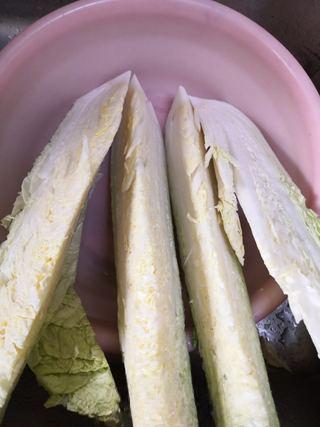
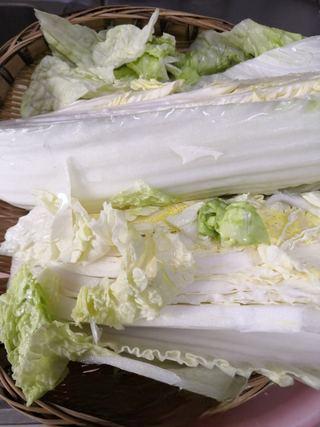
Cut the napa cabbage in half lengthwise.
Step 2
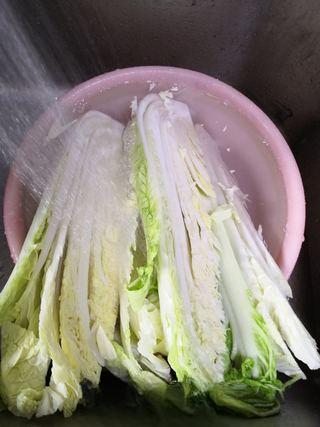
Rinse the cabbage thoroughly under running water.
Step 3
Drain and dry the cabbage completely.
Step 4
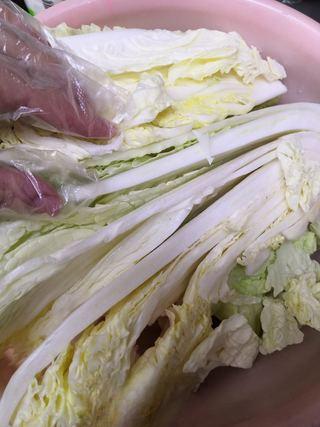
Wearing gloves, sprinkle salt between each cabbage leaf and rub evenly. Leave overnight to wilt.
Step 5
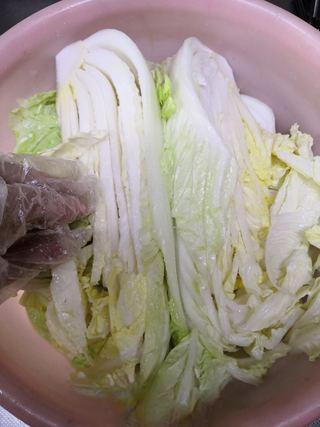
The next day, the cabbage should be softened and slightly wilted.
Step 6
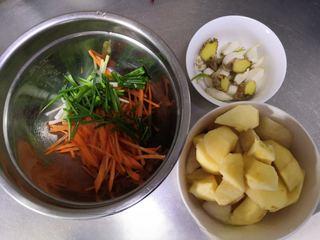
Julienne the carrot, chop the green onions, peel and dice the apple and pear, and prepare the ginger and garlic.
Step 7
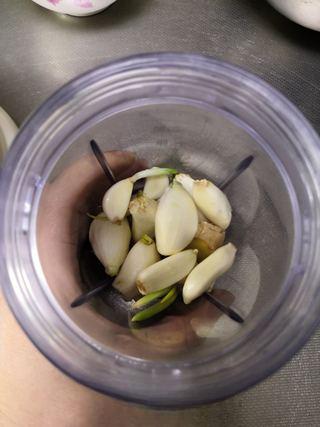
Blend the ginger and garlic until finely minced.
Step 8
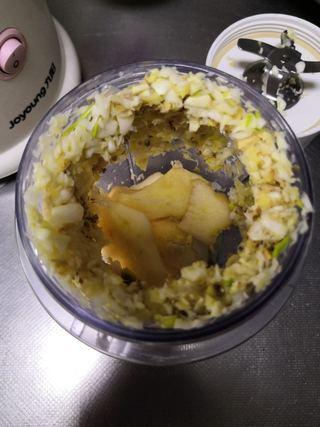
Add the apple and pear and blend together into a smooth fruit puree.
Step 9
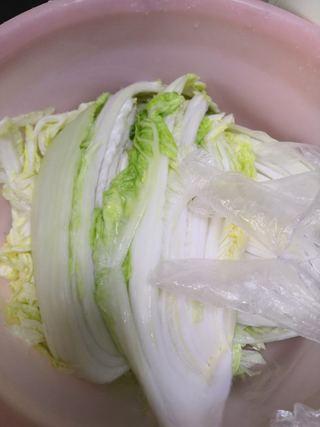
Rinse the salted cabbage briefly to remove excess salt, then drain thoroughly and gently squeeze out excess moisture.
Step 10
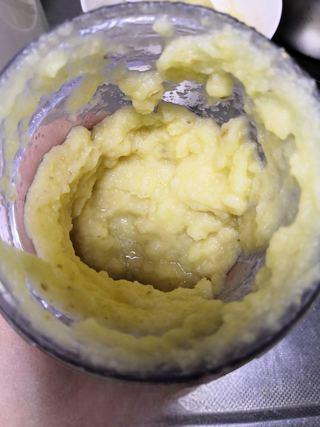
Ensure the fruit, garlic, and ginger mixture is smooth and evenly blended.
Step 11
Combine the puree with the green onions and carrot in a large bowl. Add white vinegar.
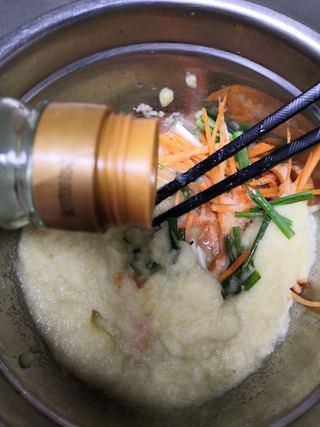
Step 12
Add sugar and mix thoroughly.
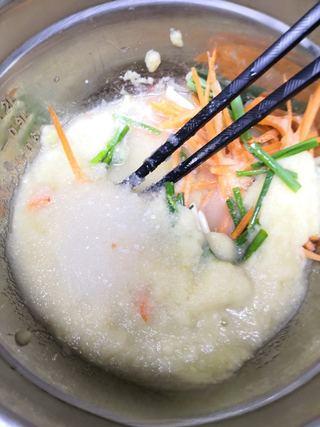
Step 13
Add chili flakes.
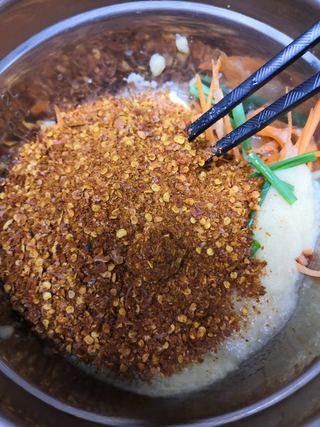
Step 14
Add Sichuan pepper flakes if desired for extra heat and numbing flavor.
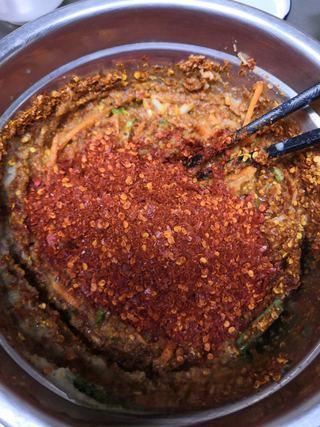
Step 15
Mix everything until a uniform seasoning paste forms.

Step 16
Place the drained cabbage in a large bowl.
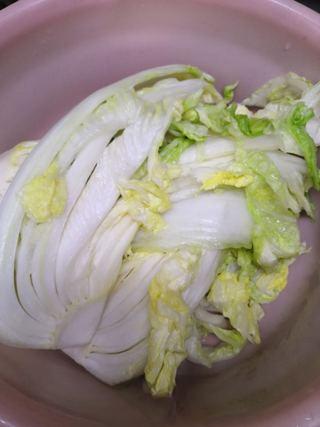
Step 17
Spread the seasoning mixture evenly between every cabbage leaf.
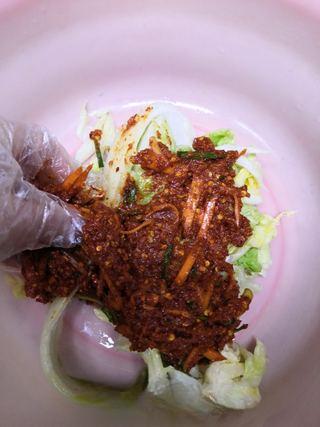
Step 18
Taste the seasoning paste and adjust with additional vinegar, sugar, or salt if needed.
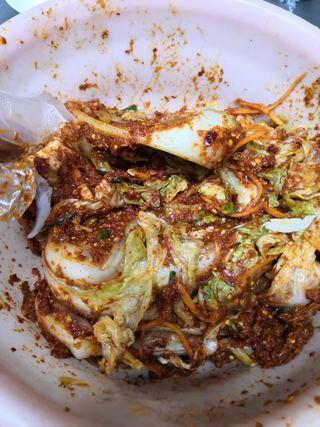
Step 19
Fold and roll the cabbage neatly, then place it into a clean airtight container.
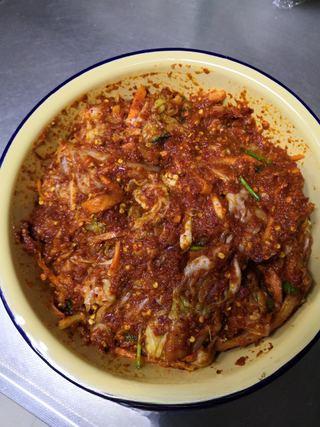
Step 20
Seal the container and refrigerate for approximately 2 weeks.
Step 21
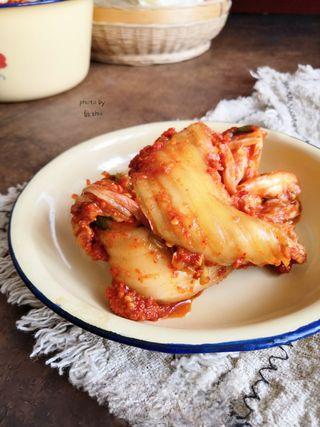
After fermentation, the kimchi will develop a rich aroma and complex flavor.
Step 22
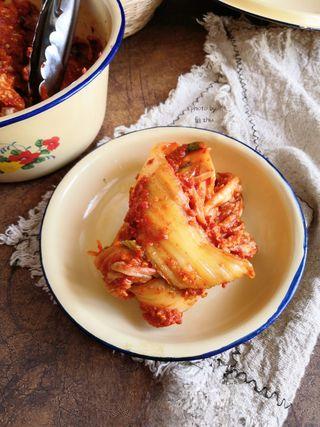
Serve as a side dish or use it in kimchi soup, fried rice, or stir-fried rice cakes.
Cooking Tips
- The apple and Asian pear puree are the key to this recipe's natural sweetness and depth of flavor. Because the cabbage is salted overnight, use additional salt sparingly. Keep all utensils and containers clean and oil-free to ensure successful fermentation. Allow sufficient fermentation time under refrigeration for the best flavor.
Serving Suggestions
- Serve it with steamed rice when you want a simple Chinese home-cooked meal.
- Use it as a small side dish with congee, noodles, dumplings, or a rich braised main.
- A small portion can brighten heavier dishes because the sour, salty flavor cuts through richness.
Recipe Card
A homemade kimchi made with napa cabbage, apple, and Asian pear. The fruit puree adds natural sweetness while garlic, ginger, and chili create a balanced spicy and tangy flavor after fermentation.
Ingredients
- 1/2 head Napa Cabbage
- 1 Apple
- 1 Asian Pear
- 1 whole head Garlic
- 1 piece Ginger
- 2 stalks Green Onions
- 1 Carrot
- To taste Salt
- 2-3 tbsp White Vinegar
- 2-3 tbsp Sugar
- 2 tbsp Chili Flakes
- 1 tbsp (optional) Sichuan Pepper Flakes
Method
- Cut the napa cabbage in half lengthwise.
- Rinse the cabbage thoroughly under running water.
- Drain and dry the cabbage completely.
- Wearing gloves, sprinkle salt between each cabbage leaf and rub evenly. Leave overnight to wilt.
- The next day, the cabbage should be softened and slightly wilted.
- Julienne the carrot, chop the green onions, peel and dice the apple and pear, and prepare the ginger and garlic.
- Blend the ginger and garlic until finely minced.
- Add the apple and pear and blend together into a smooth fruit puree.
- Rinse the salted cabbage briefly to remove excess salt, then drain thoroughly and gently squeeze out excess moisture.
- Ensure the fruit, garlic, and ginger mixture is smooth and evenly blended.
- Combine the puree with the green onions and carrot in a large bowl. Add white vinegar.
- Add sugar and mix thoroughly.
- Add chili flakes.
- Add Sichuan pepper flakes if desired for extra heat and numbing flavor.
- Mix everything until a uniform seasoning paste forms.
- Place the drained cabbage in a large bowl.
- Spread the seasoning mixture evenly between every cabbage leaf.
- Taste the seasoning paste and adjust with additional vinegar, sugar, or salt if needed.
- Fold and roll the cabbage neatly, then place it into a clean airtight container.
- Seal the container and refrigerate for approximately 2 weeks.
- After fermentation, the kimchi will develop a rich aroma and complex flavor.
- Serve as a side dish or use it in kimchi soup, fried rice, or stir-fried rice cakes.
More Chinese Recipe Guides
Related Recipes
Keep exploring Chinese home cooking with similar recipes and beginner-friendly dishes from the collection.